


How Setting Boundaries Builds Stronger Relationships
Setting boundaries is an essential life skill, both personally and professionally. Yet, we often misunderstand this fact. Far from being a way to control others, boundaries are actually about honoring your own needs, values, and emotional well-being.
In this article, we explore what it means to set boundaries, how to establish them effectively, and why they are critical to healthy, sustainable relationships.

What Does It Mean to Set a Boundary?
Setting a boundary means defining what behaviors you will and will not accept—from others and from yourself. It’s less about placing limits on others and more about taking responsibility for your own actions and reactions.
Boundaries are internal rules you set to protect your time, energy, and emotional health. For example, you might decide not to answer work emails after a certain hour or choose to disengage from conversations that feel disrespectful. These decisions are not about punishing others; they are about staying aligned with your own values and self-respect.
How Do You Establish a Boundary?
Establishing a boundary starts with self-awareness. Once you understand your needs and limits, you can communicate them clearly and consistently. Here are some examples:
Not responding to provocative or hurtful comments
Politely stating your limits in conversations
Choosing to leave a situation rather than engage in conflict
Practicing how to say "no" politely without overexplaining or apologizing
The goal is to express your boundaries through assertive communication, not aggression, so others understand and can adjust their behavior accordingly. Learning how to say no is one of the most effective ways to protect your peace of mind. Here are five tips to help you set healthy boundaries:
Identify your needs: Reflect on areas where you feel drained, disrespected, or resentful. These feelings often signal that a boundary is missing.
Clarify your limits: Decide what you are willing to accept and what crosses the line for you.
Communicate clearly: Express your boundary calmly and respectfully. Use “I” statements (e.g., “I need time to recharge after work, so I won’t be available for calls in the evening.”).
Be consistent: Reinforce your boundaries by following through. If you bend the rule too often, others may not take it seriously.
Stay compassionate but firm: Acknowledge others’ feelings while still holding your ground. Healthy boundaries are about balance, not guilt.

How Can a Boundary Strengthen a Relationship?
Contrary to the belief that boundaries create distance, they foster closeness when implemented thoughtfully. Here’s how:
They prevent resentment by allowing each person to express needs honestly.
They create emotional safety, encouraging openness and trust.
They promote mutual respect, making room for healthier, more enjoyable interactions.
By being clear about your expectations, you invite others to do the same, paving the way for deeper, more healthy communication and stronger boundaries in relationships. Take the free Communication Styles Quiz to discover how you naturally express yourself, identify areas for growth, and learn strategies for healthier conversations.
Do the Types of Boundaries Matter in Relationships?
Absolutely. Consider these three types of boundaries:
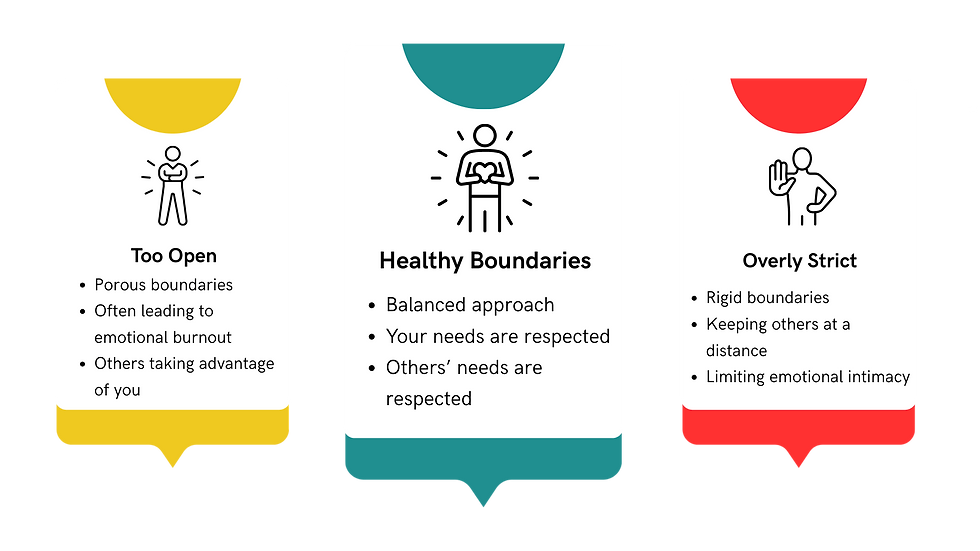
Understanding where you fall on this spectrum helps you make intentional choices about how you engage in relationships—both personal and professional.
What If Your Boundaries Upset Someone?
It’s common for others to react negatively when you start setting boundaries, especially if they’re not used to hearing “no” from you. While it’s important to communicate with empathy, remember: discomfort doesn’t mean you’re doing something wrong.
Boundaries may initially lead to tension, but over time, they build trust. If someone is hurt or confused by your boundary, open the door to conversation. Explain your perspective and invite dialogue— but stay firm in your limits.
How We Help
At Talent Transformation, we understand that strong interpersonal skills are essential for both personal growth and professional success. Whether you want to enhance your emotional intelligence, improve workplace communication, or create more meaningful personal relationships, we offer tools and resources to support your journey. Explore more of our free resources to gain practical strategies for setting boundaries, managing conflict, and developing the confidence to lead with clarity and compassion.
Takeaways
Boundaries are about self-regulation, not controlling others. They protect your emotional and mental well-being by clarifying what you regard as acceptable behavior. Healthy boundaries improve relationships by creating space for trust, respect, and connection; the types of boundaries you set matter. Aim for balance rather than rigidity or openness, and while not everyone will welcome your boundaries at first, respectful communication always helps. Ultimately, boundaries are a sign of self-respect and an invitation for others to engage with you in a healthier, more sustainable way.
References and Citations
Brown, Brené. "Daring Greatly." Gotham Books, 2012.
Cloud, Henry, and John Townsend. "Boundaries: When to Say Yes, How to Say No to Take Control of Your Life." Zondervan, 1992.
Rosenberg, Marshall B. "Nonviolent Communication: A Language of Life." PuddleDancer Press, 2003.
Goleman, Daniel. "Emotional Intelligence: Why It Can Matter More Than IQ." Bantam Books, 1995.
Harvard Business Review. “How to Set Boundaries at Work.”







.png)