


Turn AI Into Your Biggest Work Advantage
A quiet shift is reshaping how people succeed at work. Some individuals are accelerating their careers, advancing more quickly, producing higher-quality work, and making stronger decisions with less effort, while others are finding it hard to keep up. The difference isn’t intelligence or experience. It’s how effectively they’re using artificial intelligence (AI).

When you learn to work with AI, it becomes a powerful multiplier. It helps you think more clearly, execute more efficiently, and expand your capabilities. Instead of being limited by time or gaps in knowledge, you can focus on higher-value decisions and more meaningful contributions, building confidence and momentum in a rapidly changing world.
Understanding this shift is essential to staying relevant.
The Big Shift: From Tool to Teammate
Artificial intelligence has evolved fast. What used to be a background tool, like spellcheck or calculators, is now acting more like a coworker. Tools such as ChatGPT, Microsoft Copilot, and Google Gemini can write reports, analyze data, brainstorm ideas, and write code.
This shift matters because it changes your role in the modern workplace. Instead of doing everything manually, you’re now managing, guiding, and collaborating with AI.
Think of it this way:
Old work model: You do the work.
New work model: You direct the work, AI helps execute.
That’s a major upgrade if you know how to use it.
Key Insights
AI is not replacing your job; it’s reshaping how work gets done. For most professionals, AI acts more like a “smart assistant” than a threat: it enables automation of repetitive tasks, boosts workplace productivity, and enhances decision-making. The real risk isn’t AI itself; it’s falling behind in learning how to use it effectively.
Is AI a Threat? Let’s Be Real
Yes, AI will replace various tasks and, in some cases, entire roles. Jobs that rely heavily on repetitive, predictable work are most at risk.
These roles are among the most highly exposed:
Data entry clerks
Basic customer-support agents
Routine content writers
Simple bookkeeping roles
But here’s the nuance: AI replaces tasks, not entire human value.
Humans still outperform AI in:
Creativity and original thinking
Leadership and collaboration
So, the real risk isn’t losing jobs altogether, but not having the right skills for evolving roles.
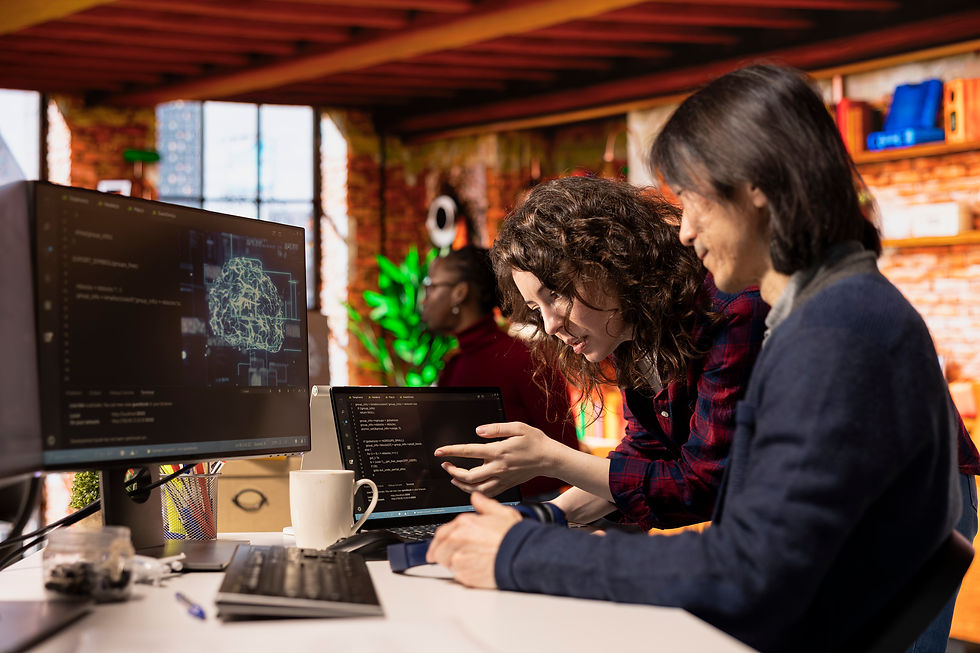
Why AI Gives You a Powerful Edge
For those who adapt, AI is a massive advantage.
1. Speed and Efficiency
AI can draft emails, summarize reports, and generate ideas in seconds. Tasks that used to take hours now take minutes, showing how to be more productive with AI support.
2. Better Decision-Making
AI can process large datasets quickly, helping you spot trends and insights faster than ever.
3. Creative Boost
Stuck on ideas? AI can generate outlines, concepts, and variations to get you moving.
4. Skill Amplification
You don’t need to be an expert in everything anymore. AI can fill gaps—whether it’s coding, writing, or analyzing.
In short: AI doesn’t replace skilled workers, it makes them faster, sharper, and more versatile.
The New Workplace Reality
AI is rapidly becoming embedded in the tools people use every day, accelerating AI integration across workflows. You will find it in Microsoft Office apps like Word, Excel, and Outlook with Copilot; Google Workspace platforms such as Docs, Sheets, and Gmail; CRM systems like Salesforce; and design tools like Canva and Adobe. As a result, adopting AI is no longer optional; it’s already integrated into modern workflows. In response, employers are raising expectations, with AI literacy emerging as a core skill, higher productivity standards becoming the norm, and hybrid human-AI collaboration defining the future of work.
How to Stay Relevant (and ahead)
The winning strategy isn’t to compete with AI, it’s to collaborate with it and become future-ready.
Focus on these professional skills:
Prompting: Knowing how to ask AI the right questions
Critical thinking: Evaluating AI outputs
Adaptability: Learning new tools quickly
Communication: Translating AI insights into action
A simple rule: if AI can do your task, your value shifts to guiding it, improving it, and applying its output strategically.

How Talent Transformation Can Help
Adapting to AI isn’t only about tools; it’s about understanding yourself, your strengths, and how you work best in a changing environment. That’s where structured self-assessments can give you a real advantage.
The Foundation for Talent Transformation offers research-backed quizzes designed to build exactly the skills needed in an AI-driven workplace.
Here are five that directly support AI readiness:
Career Readiness Quiz: Builds adaptability and resilience, helping you navigate rapid workplace changes driven by AI.
Learning Mindset Quiz: Encourages continuous learning, arguably the most important skill in staying relevant.
Cognitive Biases Quiz: Improves decision-making by helping you recognize flawed thinking, especially important when reviewing AI-generated outputs.
Communication Styles Quiz: Enhances how you interact with others, a key human skill that AI cannot replace.
Emotional Intelligence Quiz: Develops self-awareness, empathy, and emotional regulation skills that AI cannot replicate and that are essential for leadership, teamwork, and human-centered work.
These assessments don’t just provide insights; they offer actionable guidance to help you grow, collaborate better, and stay competitive in a world where AI is part of every team.
Takeaways
AI is less of a job killer and more of a performance multiplier. The real divide isn’t between humans and machines; it’s between people who use AI and people who don’t. Those who learn to work alongside AI will move faster, make better decisions, and unlock career growth opportunities, while those who resist risk falling behind in a rapidly evolving workplace.
FAQs
Will AI take my job?
Not entirely—but it may change it. AI will automate tasks, but human oversight, creativity, and strategy will remain essential.
What jobs are safest from AI?
Roles that require emotional intelligence, leadership, and complex problem-solving, such as healthcare, education, and management, are more resilient.
Do I need technical skills to use AI?
No. Many AI tools are designed for everyday users. The key skill is knowing how to use them effectively.
How do I start using AI at work?
Start small by using AI to draft emails or summaries, brainstorm ideas, analyze simple data, and explore real-world scenarios through Q&A.
I’m a student—should I worry about AI?
No. You should learn it early. Students who use AI responsibly gain a major edge in research, writing, and productivity.
References and Citations
Brynjolfsson, Erik, Danielle Li, and Lindsey R. Raymond. "Generative AI at Work." The Quarterly Journal of Economics, vol. 140, no. 2, 2025, pp. 889–942
Dell’Acqua, Fabrizio, et al. "Navigating the Jagged Technological Frontier: Field Experimental Evidence of the Effects of AI on Knowledge Worker Productivity and Quality." Harvard Business School Working Paper, 2023.
Eloundou, Tyna, et al. "GPTs Are GPTs: An Early Look at the Labor Market Impact Potential of Large Language Models." Science, vol. 384, no. 6702, 2024, pp. 1306–1308.
McKinsey Global Institute. Generative AI and the Future of Work in America. McKinsey & Company, 2023.
World Economic Forum. The Future of Jobs Report 2025. World Economic Forum, 2025.






.png)